
Dark Night Paint by Numbers
BrainArt StudioBoard
4.6572.00 Reviews
- Version
- 1.4.4
- Installs
- 500.00K
- Age Rating
- Everyone
Screenshots



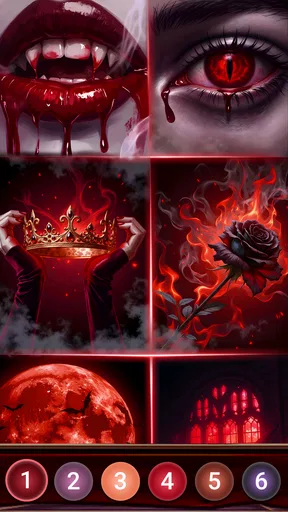




Our Review of Dark Night Paint by Numbers
 Analysis by Appyee
I found Dark Night Paint by Numbers most interesting as a quiet board game rather than a competitive one. The basic idea is simple: choose a dark, mysterious scene and bring it to life by filling the numbered areas with color. That sounds familiar, but the darker artwork gives the activity a different mood from the bright, cheerful coloring books that usually dominate this space. I spent time looking at it as both a relaxing pastime and a practical option for people who need a game that can be approached at their own pace.
BrainArt Studio presents it as a free game for everyone, and that description fits the general experience. It is available on Android devices running version 7.0 or later, with the current release listed as 1.4.4. The game has attracted over 500 thousand installs and holds a 4.6 average from around 4.2 thousand ratings, so it is clearly reaching more than a small group of coloring fans. Those figures do not replace personal testing, but they do suggest that the straightforward format has broad appeal.
How the dark artwork affects readability and navigation
The visual identity is the first thing that separates this game from ordinary paint-by-number apps. Instead of treating darkness as an empty background, it uses mysterious worlds as the setting for the pictures. I found that choice appealing because it gives each completed image a sense of atmosphere. The goal is not simply to fill a page with random color; it is to reveal a scene that initially feels hidden or incomplete.
That atmosphere also creates an important readability trade-off. Dark backgrounds can make the numbered spaces feel less obvious than they would in a high-contrast cartoon image. When I approached a picture quickly, I had to slow down and inspect the small areas rather than relying on a fast glance. For me, that made the game more absorbing, but someone with reduced contrast sensitivity may find the same design tiring.
The numbered-coloring format is easy to understand because the task is visually direct: identify the required number, locate the matching area, and apply the color. There is no complicated board-game rulebook to learn and no long tutorial concept to remember. That makes it suitable for a short break, especially when I want a structured activity but do not want to make strategic decisions or compete against another player.
I would still recommend beginning with a larger, less intricate image if the game offers several choices on the screen. Small sections can demand more searching, particularly when several neighboring areas use similar shades. A useful habit is to work from the broad shapes toward the fine details. Completing the larger visible regions first gives the picture more structure and makes the remaining spaces easier to find.
Navigation matters just as much as the artwork for players who do not use a game in the usual fast, touch-heavy way. In my experience with this kind of interface, the best sessions come from treating the screen as a calm workspace rather than tapping randomly. I look for the active number, scan the image methodically, and use deliberate touches. That approach reduces accidental marks and makes the experience feel more predictable.
The game’s category is officially board, although it does not resemble a traditional board game with turns, pieces, or opponents. I think of it as a digital coloring board: the numbered image is the board, and the player gradually changes its state. That distinction is useful when deciding whether it is right for you. If you want puzzles, tactics, or a social match, this will feel too passive. If you want a guided visual activity with a clear destination, the board-game label makes sense in a broader way.
Why the interface can work for different reading abilities
One strength of paint-by-number design is that it reduces the amount of written instruction needed. A player can understand the central action from the picture itself. That is helpful for someone who prefers visual guidance, has difficulty processing long explanations, or simply wants to start without studying menus. The numbered relationship between the palette and the image gives the task a language-light quality.
That does not mean the experience is equally effortless for everyone. Players who have trouble distinguishing small symbols, similar colors, or crowded sections may need more time. The dark artistic style can make that issue more noticeable. I would not describe the game as an accessibility tool, because there is no reason to assume it includes specialized support. I would describe it as approachable in concept, with visual demands that may vary significantly from one person to another.
A practical way to test it is to play for a few minutes with the device held at the distance and brightness you normally use. If the numbers and boundaries remain comfortable without squinting, the format may suit you well. If you find yourself repeatedly searching for tiny regions, the game may be better in short sessions than as a long evening activity.
Motor, sensory, and situational considerations
Touch control makes the game feel immediate, but it also places the main physical demand on accurate pointing. Filling a large region should be easy for most players, while narrow shapes and isolated details require steadier taps. I noticed that the most comfortable rhythm is not constant rapid tapping. It is a sequence of careful touches, with brief pauses when the image becomes dense.
That has a positive side for people who prefer low-pressure interaction. There is no need to beat a timer, react to moving objects, or coordinate several controls at once. A player can concentrate on one area and proceed gradually. Someone with limited fine-motor control may still encounter difficulty with tiny sections, but the overall task is less demanding than an action game or a fast puzzle that requires continuous movement.
For users who experience hand fatigue, I would avoid holding the phone in one hand for the entire session. Resting it on a stable surface can make precise touches easier and reduce the need to grip the device tightly. This is a simple adjustment, but it changes the experience noticeably when an image contains many small spaces.
Sensory comfort is more complicated because the game’s appeal comes from its dark-night mood. Players who enjoy shadowy scenery, muted surroundings, and a gradual reveal may find the style calming. Others may prefer brighter images with clearer separation between the background and the coloring areas. The same visual choice that gives the game its personality can therefore be either a strength or a barrier.
I also think about the setting in which the game is played. On a bright outdoor screen, dark artwork may be harder to inspect than it is indoors. In a dim room, the image may feel more atmospheric, but extended screen use can still become uncomfortable. I would adjust the device’s brightness to the room rather than maximizing it automatically, and I would take breaks when the small details begin to blur.
The free entry point is useful for trying the style without committing money immediately. The game includes in-app purchases ranging from $0.99 to $39.99 per item, which is a wide enough range that I would pay attention before confirming any optional purchase. For a casual player, the sensible approach is to explore the free experience first and decide whether the artwork and pace justify spending. A person who dislikes optional purchases in free games may prefer a paid coloring app with a simpler payment model.
Where it fits into an ordinary day
My favorite use case is a short transition between demanding tasks. Imagine finishing work, waiting for an appointment, or sitting on public transport with enough battery and a few quiet minutes. This game gives that time a clear shape: choose an image, complete a manageable portion, and stop without losing the sense of progress. It is more engaging than staring at a blank screen but less mentally demanding than reading a complicated article or playing a competitive match.
It can also work as a wind-down activity for someone who enjoys creative routines but does not want to draw from scratch. The numbered structure removes the pressure of deciding what to create. I can focus on the next small area instead of judging whether my own composition is good. That makes it appealing to people who like coloring but feel uncertain about their artistic skills.
On the other hand, I would not choose it for a group gathering unless everyone already enjoys quiet individual activities. There is no obvious social challenge in the core concept, and the pleasure comes from personal concentration. A traditional board game is a better choice when the goal is conversation, shared decisions, or friendly competition.
It is also not the right replacement for a serious digital art application. The numbered structure guides the result, which is exactly why it feels accessible, but it also limits creative control. You are revealing a prepared image rather than designing your own scene, experimenting freely with brushes, or building a personal portfolio. A drawing app is better for learning illustration or expressing an original idea.
Remaining barriers and practical trade-offs
The main barrier is the combination of small target areas and a dark visual presentation. Players with strong eyesight and steady touch may see this as satisfying detail. Players with low vision, tremor, joint pain, or difficulty distinguishing close shades may find it frustrating. The game’s simple concept should not be confused with universal physical ease.
Another limitation is the potential for repetition. The first completed pictures benefit from the reveal effect, but the underlying action remains similar: identify, tap, and continue. I enjoyed that repetition when I wanted something meditative. I would lose interest more quickly if I were looking for constantly changing mechanics, escalating strategy, or a strong narrative.
The game also asks the player to accept its artistic direction. The mysterious-world theme is distinctive, but it will not suit someone who mainly wants cheerful landscapes, familiar objects, or highly realistic coloring pages. I would recommend it to a friend who likes nocturnal fantasy and atmospheric imagery, not to someone choosing a coloring app purely for bright visual variety.
Before installing, I would consider the device experience as well as the game itself. The minimum operating-system requirement is Android 7.0, so older compatible phones may qualify, but screen size still matters for precise coloring. A larger display can make detailed areas easier to inspect, while a compact phone is more convenient for waiting-room sessions. That is not a reason to reject the game, but it affects who will find the touch work comfortable.
Version 1.4.4 is the current version, and keeping the app updated is generally sensible when using a game that depends on a smooth touch interface. I would also check the purchase confirmation carefully, especially if children use the device. The age rating is Everyone, which makes the theme broadly suitable, but “Everyone” describes content suitability rather than guaranteeing that every visual detail or touch requirement will work for every player.
One less obvious advantage is that the game can serve as a low-stakes concentration exercise. I would not call it therapy or claim a medical benefit, but the numbered workflow encourages visual scanning and controlled selection. For someone trying to replace restless scrolling with a more focused habit, that structure may be useful. The trade-off is that the benefit depends on choosing an image and pace that do not turn the activity into a struggle.
Another useful approach is to stop before complete fatigue rather than treating every picture as a task that must be finished in one sitting. Dark, detailed scenes can become less readable when attention drops. Splitting one image across several short sessions preserves the relaxing quality and can make the final reveal more enjoyable. This is especially relevant for users who need frequent breaks or who play in environments with changing light.
A third consideration is emotional tone. Some coloring games use bright colors to create instant cheerfulness; this one appears designed around mystery and transformation. If I want a lively mood, I would choose a brighter alternative. If I want to settle into a quieter atmosphere, the darker palette gives this game a clearer identity than a generic coloring board.
Who should try it and who should choose something else
I would recommend it to adults and children who enjoy guided coloring, atmospheric fantasy, and activities that can be paused at any moment. It is also a reasonable choice for people who want a board-style game without competition, complicated rules, or a need to coordinate with other players. The free download makes experimentation easy, provided the optional purchase structure is acceptable to you.
I would be more cautious if you have difficulty reading small numbers, distinguishing similar colors, or making precise touches. The game may still be playable with patience and a suitable device, but I would not promise a comfortable experience. A coloring app with larger areas, brighter contrast, or more direct accessibility controls would likely be a better fit.
I would also steer competitive players elsewhere. There is no reason to install this expecting leaderboards, tactical depth, or the tension of a conventional board-game match. Its value comes from concentration and gradual visual change. Likewise, artists seeking brushes, layers, and complete freedom should use a drawing tool instead.
BrainArt Studio has chosen a narrow but recognizable direction: dark scenes, numbered coloring, and a calm sense of discovery. That focus is more valuable than trying to satisfy every type of player. It gives the game a mood I can remember, while also making its limitations easier to identify.
My inclusive verdict is positive but qualified. The game is easiest to enjoy when visual detail and careful tapping feel comfortable for you. Its simple numbered workflow supports different ages, reading preferences, and energy levels, and its lack of competitive pressure makes it suitable for many everyday situations. At the same time, the dark artwork and fine sections can create real friction for players with visual or motor challenges, and the repeated coloring loop will not satisfy people seeking strategy or creative freedom.
For me, Dark Night Paint by Numbers works best as a quiet, atmospheric break: something to open when I want to focus on one small task and watch a mysterious image gradually emerge. Its 4.6 average and growing audience reflect a format that many people clearly enjoy, but the decision should come down to your comfort with dark visuals, precise touch work, and optional purchases. If those conditions suit you, this is a thoughtful board-style coloring game rather than just another disposable time filler.
It was released on January 17, 2025, and remains free to start, so I see little downside in trying a session before deciding whether it belongs in your regular rotation. I would begin with a simple image, use a stable surface, keep the screen at a comfortable brightness, and judge the experience by how relaxed your eyes and hand feel afterward. That small test tells you more than the store summary: the game succeeds when its mystery invites patience, and it falls short when the detail becomes work.
Verdict
Strengths of Dark Night Paint by Numbers
- Relaxing color-by-number gameplay for winding down
- Large variety of dark fantasy and night-themed artwork
- Simple controls make it accessible for casual players
- Helpful hints assist with difficult or tiny sections
- Works well for short play sessions on mobile
Limitations of Dark Night Paint by Numbers
- Some pictures and tools may require in-app purchases
- Repeated tapping can become tedious on detailed images
- Frequent ads may interrupt the coloring experience
- Limited creative freedom compared with a blank canvas
- Requires patience when completing highly intricate designs
Other Releases by BrainArt Studio
View All
Wild Color - Paint by Number
Board4.7

Magic Fantasy Paint by Numbers
Board4.8

Dark Fairytale Color by Number
Board4.4

Nature Calm Paint by Numbers
Board4.8
Similar Picks in This Category
View All
Ludo King®
Gametion4.1

Ludo
Yarsa Games4.6

Tile Master® - Matching Game
Higgs Studio3.6

Checkers Online
CC Games4.6

Dominoes
Loop Games4.7

Chess
Chess Prince4.6
Frequently Asked Questions
What is Dark Night Paint by Numbers?
Dark Night Paint by Numbers is a relaxing coloring game built around numbered illustrations with a mysterious, nighttime aesthetic. After selecting an image, you fill each section by matching it with the correct color. The experience is designed to be simple and calming, making it suitable for short sessions as well as longer periods of casual play. Artwork, available categories, and features may vary between app versions.
How does the coloring system work in Dark Night Paint by Numbers?
The basic process is straightforward: choose a picture, select a numbered color, and tap the matching areas to complete the artwork. Unfinished sections can usually be located through the color palette or highlighting tools, which is helpful when small spaces are difficult to find. The game focuses more on relaxation and completion than on artistic skill, so users do not need previous drawing or coloring experience.
Is Dark Night Paint by Numbers free to download and play?
Dark Night Paint by Numbers can generally be downloaded at no initial cost, but the free experience may include advertising, optional purchases, or limits on certain images and tools. Availability can differ depending on the Android or iOS version and the developer’s current monetization model. Before downloading, it is worth checking the store listing for in-app purchase details, subscription terms, and any content restrictions.
Does Dark Night Paint by Numbers require an internet connection?
Some parts of Dark Night Paint by Numbers may work without a continuous internet connection, particularly previously loaded coloring pages and basic gameplay. However, an internet connection may be needed to download new artwork, display advertisements, synchronize progress, or access online features. Offline behavior can change after updates, so users who plan to play while traveling should open the app beforehand and confirm that their preferred content is available.
Is Dark Night Paint by Numbers suitable for children?
The tap-based coloring mechanics are easy for many children to understand, and the dark fantasy-inspired artwork may appeal to users who enjoy nighttime or mysterious themes. Nevertheless, parents should review the available images, advertising, privacy information, and in-app purchases before allowing a child to play. Younger users may also need help with reading numbers, navigating menus, or avoiding accidental purchases, depending on the device settings.
Play our best games!


